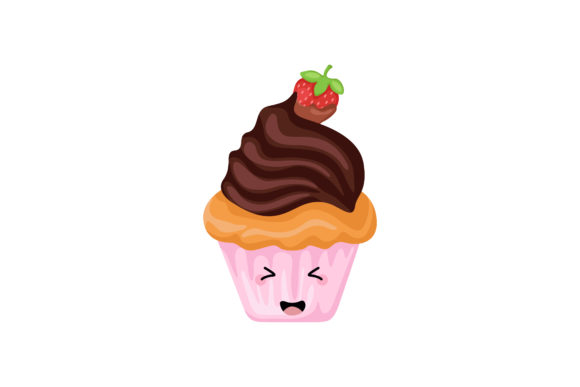
Happy Sweet Cupcake Kawaii Illustration
A Designer’s First Look: Charm Without Clutter
When I opened Happy Sweet Cupcake Kawaii Illustration, my first thought wasn’t “cute”—it was “clear.” The design lands with soft confidence: rounded cupcake shape, gentle swirl of frosting, subtle cherry on top, and that unmistakable kawaii warmth—big-eyed sweetness without saccharine overload. It’s not overly detailed, but it’s *intentionally* expressive: clean lines, balanced negative space, and a silhouette that reads instantly at 2–3 inches tall. That matters—especially when you’re stitching for baby onesies, linen tea towels, or embroidered patches meant to hold up after repeated washes.
Where This Design Actually Shines (and Why)
I tested Happy Sweet Cupcake Kawaii Illustration as the centerpiece for a custom organic cotton tote bag—part of a small-batch kitchen-themed line for a local boutique. It stitched cleanly on medium-weight canvas with tear-away + cut-away stabilizer combo. The satin stitch on the frosting held crisp edges; the fill stitch in the base was dense enough to avoid transparency but light enough to drape naturally. Customers responded immediately—not just to the motif, but to how *finished* it felt. No pixelated edges, no thread nests, no awkward gaps between elements. That’s rare in kawaii-style graphics repurposed for embroidery.
It works beautifully on:
- Sweatshirt embroidery—the shape fills a standard 4×4 hoop without distortion, and the low-detail profile avoids bulk on fleece-backed fabric;
- Baby embroidery—on gauzy swaddle blankets or knit bibs, its simplicity translates well even at reduced scale;
- Embroidered patch production—clean outer edge makes cutting and heat-sealing reliable;
- Holiday embroidery—paired with a tiny “Bake Joy” running-stitch banner, it becomes an instant Easter or birthday gift staple;
- Etsy seller mockups—it renders cleanly in printable mockups for digital listings, adding handmade charm without visual noise.
Real Limits You’ll Notice on the Hoop
This isn’t a one-size-fits-all embroidery file. Its strengths become limitations where precision or texture dominates:
- Small hoop sizes (<3.5"): The cherry detail and frosting swirl start to lose definition below 2.25". Not unusable—but expect to simplify or omit fine accents manually.
- Stretchy or thin fabric: On lightweight jersey or ribbed knit, the satin stitch on the cupcake wrapper can pucker without proper stabilizer support. Always test with your exact fabric blend.
- Dark fabric backgrounds: The design relies on contrast—especially in the frosting highlights. If you’re stitching on charcoal or navy, confirm thread color values match your intended palette before digitizing.
- Curved surfaces (caps, beanies): The symmetrical, flat-bottomed shape doesn’t wrap naturally. It sits cleanly on front panels but may require slight repositioning or minor digitizing tweaks for crown placement.
What It Adds to Your Finished Product—Beyond Aesthetics
As a designer who ships 200+ custom embroidered items per season, I pay attention to what makes a piece feel *valued*, not just decorated. Happy Sweet Cupcake Kawaii Illustration elevates perceived quality because it avoids common pitfalls: no jagged vectors, no over-digitized shadows, no unnecessary underlay that adds stiffness. That means:
- Customer trust rises—handmade products with clean, confident stitching read as intentional, not rushed;
- Brand consistency tightens—it pairs effortlessly with minimalist fonts, neutral palettes, or other kawaii-adjacent motifs without competing;
- Giftability increases—people photograph and share items with this design more often, especially on baby gifts or kitchen-themed presents;
- Buyer engagement improves—Etsy sellers report higher click-through on listings featuring this illustration in lifestyle mockups, likely due to its immediate emotional resonance.
Practical Notes Every Embroidery Designer Should Check
Before stitching your first batch—or listing a finished product—run through these:
- Test on scrap fabric using your exact stabilizer, needle, and thread—especially if working with textured linen or terry cloth;
- Review stitch density: Is the frosting area too dense for delicate fabrics? Does the base fill stitch breathe on lightweight cotton?
- Confirm hoop size compatibility: Does it fit comfortably within your most-used hoop without scaling or trimming?
- Inspect small details: Zoom in on the cherry stem and frosting swirl—are they digitized as single-pass satin or layered? That affects stitch time and thread breaks.
- Try black-and-white mockups: Does it retain personality in monochrome? Useful for branding flexibility and accessibility.
- Compare light vs. dark backgrounds: Does the design need alternate thread palettes—or a subtle outline—to pop on deep tones?
- Verify licensing: As a Graphics asset in the Illustrations category, confirm whether commercial use (e.g., selling embroidered totes or digital embroidery files) is permitted under its license terms.
Final Thought: A Reliable Spark, Not a Standalone Solution
Happy Sweet Cupcake Kawaii Illustration won’t carry your entire product line—but it’s the kind of design that quietly lifts everything it touches. It’s the cheerful detail on a nursery pillow cover, the warm accent on a holiday apron, the trusted element your Etsy customers recognize across seasons. It doesn’t shout. It smiles—and stitches cleanly while doing it. For craft business owners, apparel decorators, and makers who value clarity over clutter, this is less of a “design” and more of a dependable tool. Just remember: even the sweetest cupcake needs the right pan, the right oven, and the right timing. Test it. Respect its limits. And let it do what it does best—add joy, one precise stitch at a time.